A frame of Angkor…..

A rare sight- A live Conus textile (Linnaeus, 1758) on the prowl, siphon extended.
Cone snails are one of the most venomous creatures on earth. Among the most toxic are the textile, geographic, and tulip snails and there is a higher risk of death if the geographic and textile snails are involved. All capture their prey by means of harpoon-like hollow teeth (radula) that are rapidly jabbed into their prey to inject the toxic venom. Attacks on humans usually occur when a cone snail is either stepped on in the ocean or picked up from the water or the beach.There are known human fatalities from this species.
Their geographical distribution is throughout the Indo-Pacific region, Australia, and the Indian Ocean from eastern Africa to Hawaii and French Polynesia.
The textile cone lives in the sand beneath coral and rocks in shallow waters. If you do come across one, admire quickly and walk away. Do not pick one up…..

A white carpet anemone (Stichodactyla sp.), a rare find in the inter-tidal zone at an extremely low tide on a lonely beach near Shannah, Oman. An Indo-Pacific occupant, living on reefs or on the sandy bottom, these anemones can attain a size of two and a half feet in diameter. Potentially harmful to humans ( a potent sting) they act as a host for many types of clownfish.

As a seashell collector, this beautiful shell was a rare beach find for me.
This Lambis truncata sebae (Kiener, 1843) was found washed up on a rock shelf at low tide just south of Dibba in the United Arab Emirates. Imagine my pleasure to spot this virtually intact sub-adult lying in a rock pool after a storm.
More on my Lambis finds at the link.

Morning light from the rising sun casts shadows across the dunes, giving a surreal effect. Shot at the edge of the Empty Quarter, just before the Saudi border.

Sunrise at sabkha plains in Oman…the morning mist makes for an eerie atmosphere in the half light…..


Morning all… Fresh figs picked from the tree for my breakfast….


A narrow alley in Muscat’s Muttrah souk area.
Narrow windows and a narrow balcony with a tantalising glimpse of the end through the narrow arch…

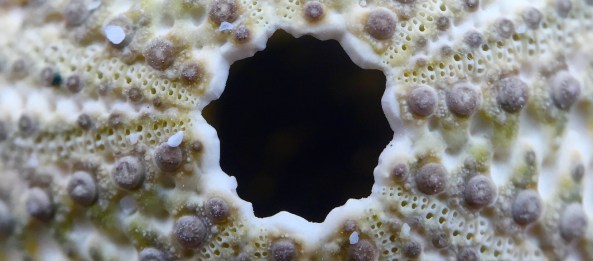
Details from the sea. Corals, sea urchins, echinoderms, shells and a tiny starfish…. using a Moment macro lens for iPhone 6 and playing with PicMonkey for editing….


A shot from in a night market in Vietnam of a tank full of live shells to be chosen for dinner. The opposite colour and pattern contrasts of the plain outside of the orange Baler shell and striated clams behind, against the vibrant, zebra-striped mollusc seemed to fit this week’s challenge….

On a street wall in Stokes Croft area of Bristol, shot in May, amusing at the time, a “not to be missed shot”, but…after recent events could this partnership become a reality?….who knows, the world is currently a changing place…


Modern and old architecture in Dubai features curves. The mosques always have curves in their domed roofs, the contrast of the angular lines of the minarets with the elegant curve of the roof and windows is very pleasing to my eye. The most well known curved buildings are the Burj Al Arab hotel and the Jumeirah Beach hotel, featured below.The header shot is of the Atlantis hotel on the Palm Jumeirah islands, the curved opening in the design makes an iconic feature…. Continue reading
How we each imagine a visual portrayal of Pure is the challenge.
My instant reaction is white, clean-cut, symmetrical and aesthetic lines of religious symbolism.
Shots from a recent visit to the British Museum in London, sadly including some reflection of my pure, aesthetically contoured handbag….


My entry for this week’s photo challenge comes from England, featuring some 14th-century clock faces with beautiful numerals…
The Wells Cathedral clock is an astronomical clock in the north transept of Wells Cathedral, England. The clock is one of a group of famous 14th to 16th-century astronomical clocks to be found in the West of England. The surviving mechanism, dated to between 1386 and 1392, was replaced in the 19th century and was eventually moved to the Science Museum in London, where it continues to operate. The dial represents the geocentric view of the universe, with sun and moon revolving around a central fixed earth. It may be unique in showing a philosophical model of the pre-Copernican universe.


Another dial is mounted on the outside wall, driven by the same mechanism. This was first installed in the 14th or 15th-centuries but has been restored a number of times.


Information courtesy of Wiki
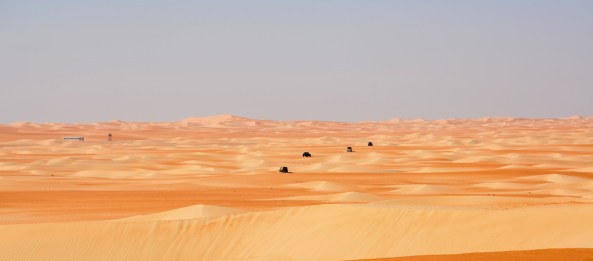
Travelling across the desert in the Al Gharbia western region of the UAE, from White Sands to Liwa, the landscape is almost devoid of life. Occasionally small bushes break through the sand, a welcome sight contrasting to the ochre hues in this spare landscape. Not too many camels this far out into the desert either, but I did find a mother and baby….


Jubilant:adjective
1.showing great joy, satisfaction, or triumph; rejoicing; exultant:

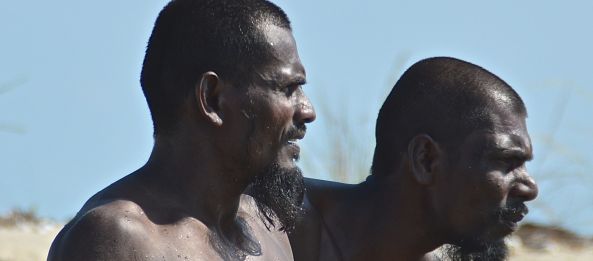
The lovely faces of some Sri Lankans I met on my travels around the north coast of this glorious island, also known as Serendipity. The history, beautiful scenery and the people make it an island to love and I remember all of these moments below with such pleasure.Faces tell such a story… Continue reading

Colours of our Earth… layers of soil, undergrowth, tree trunks and foliage up to the intense sunlight…. taken from a moving jeep in the jungle using Slow Shutter app on Iphone6 and Snapseed for editing…
Earth
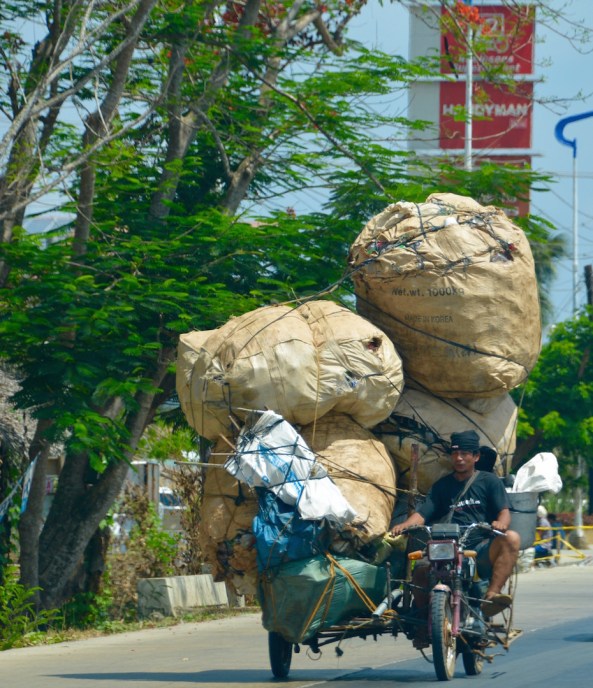
I’m travelling in the Philippines right now and I am full of admiration for the tenacity and nature of the people inhabiting this vast island state.
There is an unimaginable disparity between those who have and those who do not and I have been so welcomed in the most remote places, wonderful people…. This photo encompasses the ingenuity of folks who have to make do to survive… my full admiration for this dangerous and resourceful packing idea, needless to say, there were no traffic police around…

Sea anemone at low tide, flopped over on one side, waiting for the sea to return… abstract shapes and electric colours, PicMonkey for the outer blur…
Abstract


 Travels in the Middle East and beyond